This highlights the various programmes and activities implemented by the Department in line with its mandate, goals, and strategic priorities. The Department implements a wide range of programmes and schemes including Centrally Sponsored Schemes, State Plan Schemes, Externally Aided Programme and other schemes implemented by the department that aims at promoting inclusive growth and effective public service delivery. It provides an overview of the major initiatives, projects, and services undertaken during the review period, emphasizing their relevance to national development objectives and state-level priorities. The chapter also outlines the key performance indicators, target beneficiaries, and outcomes of each programme, as well as the challenges encountered and measures adopted to ensure effective implementation. Through these programmes and schemes, the Department continues to fulfil its commitment to efficient governance, transparency, and responsiveness to the needs of the public.
The programmes/schemes implemented by the Department are:
State Plan Schemes Centrally Sponsored Schemes Other Schemes Implemented by the Department Externally Aided Programme: Climate-Adaptive Community-Based Water-Harvesting Project in MeghalayaThis scheme covers the general areas outside those not specifically covered by other packages of schemes of the Department. Its main objective is to reduce soil erosion hazards and land degradation and conservation of water, where individuals/groups of farmers are targeted. Activities taken up under this Scheme includes:
The scheme is meant to prevent further erosion of cultivated areas along stream bank from direct impact of stream water by construction, retaining wall, spurs, check dam, gully plugs vegetative barriers etc.
OBJECTIVES:
The Programme aims at providing vegetation cover to barren hills slopes with the objectives to protect the land from further erosion and to maintain a favourable eco-system through the protective and ameliorative effect of forest cover, to improve the aesthetic beauty of the surroundings; to serve as recreational areas and for sustainable production of fuels, fodder, fruits, fibres, etc.
OBJECTIVES:
The Miyawaki Method is an innovative afforestation approach that emphasizes the use of native plant species to develop dense, multi-layered forests in a short span of time. Also known as the Dense Planting of Potted Seedlings technique, it involves planting a diverse mix of indigenous species in close proximity. This close spacing encourages plants to compete for sunlight, causing them to grow vertically rather than horizontally, which results in rapid forest formation and enhanced canopy density.
ENVIRONMENTAL BENEFITS:
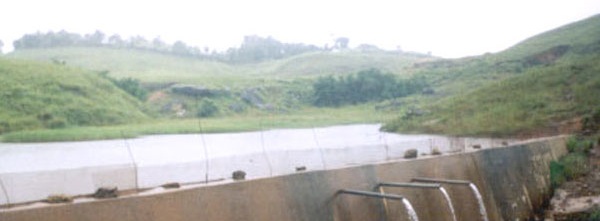
The Scheme is meant for construction of Dams, Canals and Aqueduct etc.; which can be utilized for irrigation, drinking water and other purposes as required by the village communities.
OBJECTIVES:
The scheme is meant for development of Plantation Crops in different Districts in the State. Cash Crop Plantations are being encouraged in areas where cultivations of other field crops are not feasible due to steep slopes condition, soil fertility status etc.
OBJECTIVES:
Meghalaya, with its altitudes of over 4,000 feet above sea level across many places and a unique climate, has been producing some of the most distinctive high-quality coffee in the country. Commercial plantation of coffee is relatively new and limited in Meghalaya and dates back to 1954 when coffee gardens were first established Umling in Ri-Bhoi district, Lumshnong in East Jaintia Hills district, and Tura in West Garo Hills district.
The Government of Meghalaya has undertaken a dedicated initiative to promote and expand coffee cultivation across the state, leveraging its favourable agro-climatic conditions, rich soil, and strong tradition of organic farming. The programme aims to enhance farmers’ incomes and establish Meghalaya as a centre for high-quality coffee production by boosting output, encouraging value addition, strengthening market linkages, and fostering greater participation from the private sector.
The project undertaken envisages on a cluster-based area expansion approaching the existing coffee growing regions as well as formation of new clusters in which priority is to be given for clusters with fruit orchards. These clusters are to be mapped with farmer collectives like Co-ops, FPOs, FPCs, VOs etc., (both new and existing) for effectiveness of interventions in value addition and marketing.
The Plantation Crop Division of the Department will be the implementation agency(IA) in conducting awareness and training programs for growing and nursery management(co-ops) as well as conducting timely field level inspection in partnership with coffee board. The Department will be raising 15 lakhs coffee seeds in the existing nurseries and once these seedlings are ready for transplantation, they will be distributed among the existing beneficiaries in 130+coffee growing villages and also to the beneficiaries which will be added from the area to be expanded in 650+villages with orange orchards.
Cocoa has shown great potential as a viable crop for Meghalaya’s tropical climate, owing to its ability to thrive under shaded conditions. Leveraging this trait, the state is promoting cocoa cultivation in combination with existing crops such as are coconut, black pepper, and various fruit trees. This intercropping approach not only maximizes land utilization but also boosts overall farm productivity and farmer income.
To ensure effective implementation, cocoa plantations are being developed through a cluster-based model that facilitates future processing, value addition, and marketing initiatives.
Cocoa is a crop that requires temporary or permanent shading for growth and development. It can grow in soils with a pH of 5.0–7.5, but excessive acidity or alkalinity should be avoided. In Meghalaya, plantation of cocoa is introduced as mixed crop Arecanut plantation along with Black Pepper in the cultivable areas. Cocoa is a perennial crop, and it can withstand different seasonal variations with good health and yield potential. The Cocoa project aims to increase production per unit area and enhance economic return by utilizing space more effectively through adoption of this cropping system.
The scheme is for the construction of different soil and water conservation works in urban and semi-urban areas.
OBJECTIVES:
The objective of the scheme is to conserve water by constructing water harvesting structures, dug out ponds, water tanks, etc. The scheme is also meant for prevention of downstream siltation, multi-purpose water use, water conservation dam and water harvesting dam structure will serve as footpath/footbridge. Improvement of micro-environment, ecology, recreational facilities can later be incorporated.
OBJECTIVES:
The project thus aims to introduce improved farming system in the form of Slopping Agriculture Land Technology (SALT) where the farmers can incorporate both the existing agriculture crops with forest trees for protection, fruit trees and agriculture crops for income generation and introduction of Nitrogen Fixing Trees & Shrubs (NFTS) for enhancement of soil fertility. The project also aims to facilitate settle farming through terrace cultivation.
OBJECTIVES:
The scheme is meant for Conservation and Rejuvenation of the 747 critical water sources from which the PHE Department draws water for the Water Supply Scheme and needs interventions for ensuring that these sources are able to sustainably provide water supply to the villages especially during the dry season. The issue was also raised during the Meeting of the Meghalaya State Council on Climate Change and Sustainable Development chaired by the Hon’ble Chief Minister, Government of Meghalaya held on the 16th May, 2024.
OBJECTIVES:
THE INTERVENTIONS PLANNED ARE:
THE PROJECT COMPONENTS INCLUDE:
The main objective of the National Bank for Agriculture and Rural Development (NABARD) projects is for promoting sustainable and equitable agriculture and rural development through effective credit support, related services, institution building and other innovative initiatives.
To achieve the above aims and objectives, construction of the following Soil & Water Conservation Structures are taken up:-
The main objective of the Fund is to provide loans to State Governments and State-owned corporations to enable the Departments to complete ongoing rural infrastructure projects. The Department is implementing 14 ongoing projects under RIDF-XXIX during FY 2024-25. The expenditure incurred under the RIDF-XXIX during 2024-25 is ₹700.00 lakhs and the area treated till date is 259 hectares. The works completed under RIDF-XXIX during 2024-25 are RCC Dam (6 nos.), CC Dam (4 nos.), Water Harvesting Structure (10 nos.), Dugout Pond (10 nos.), Irrigation Channel (26 nos. and 1870 Rm), Ringwell (3 nos.), Protection Wall (42 nos.), Stone/Boulder Pitching (910 Rm) and Improvement of Existing Paddy Field (32 Hectare).
Despite having high annual rainfall, the State of Meghalaya faces significant water scarcity issues especially in the lean season; the situation has worsened in last 5 years due to the adverse impact of climate change. To address this challenge, the Government of Meghalaya in close collaboration with the Asian Development Bank has proposed to implement the Climate-Adaptative Community-based Water Harvesting Project.
The Climate-Adaptative Community-Based Water Harvesting Project (CACBWHP) is a strategic initiative by the Government of Meghalaya, supported by a $50 million loan from the AsianDevelopment Bank (ADB) and a $12.5 million state contribution, bringing the total project cost to $62.5 million. Scheduled for completion by December 2030, the project addresses critical water security challenges by deploying 533 climate-resilient Water Harvesting Systems (WHS) across Meghalaya. These systems integrate Catchment Area Treatment (CAT) for soil and groundwater restoration, Command Area Development (CAD) for irrigation efficiency, and livelihood programs in fisheries, agriculture, and eco-tourism. Capacity-building initiatives ensure sustainable, community-led water management.
The project operates statewide across all 12 districts of Meghalaya. The Soil and Water Conservation Department (SWCD) serves as the Executive Agency (EA), while the Meghalaya State Watershed and Wasteland Development Agency (MSWWDA) acts as the Implementing Agency (IA). Leadership is spearheaded by Dr. Joram Beda, IAS, Commissioner and Secretary of SWCD, who holds the position of Project Director.
The proposed project will strengthen climate-resilient water harvesting systems by creating an average pondage area of 0.3 Ha and approximate water storage of 10 MCM (million cubic meters), through community demand driven participatory approach. The proposed project will cover a total Catchment Area of 12500 Ha and a Command Area Development of 3297 Ha. The increased surface water runoff, enhanced ground water levels, and increased conservation of water will ensure availability of water for irrigated agriculture, pisciculture, eco- tourism, and livestock rearing, thus creating livelihood opportunities, and significantly contributing to the socio-economic empowerment of Meghalaya. Mass afforestation programs and grassland development interventions will be undertaken in the command & catchment areas of the project, as part of an integrated watershed management approach. The proposed duration of the project is 6 years fromFeb 2025 - Oct 2030.